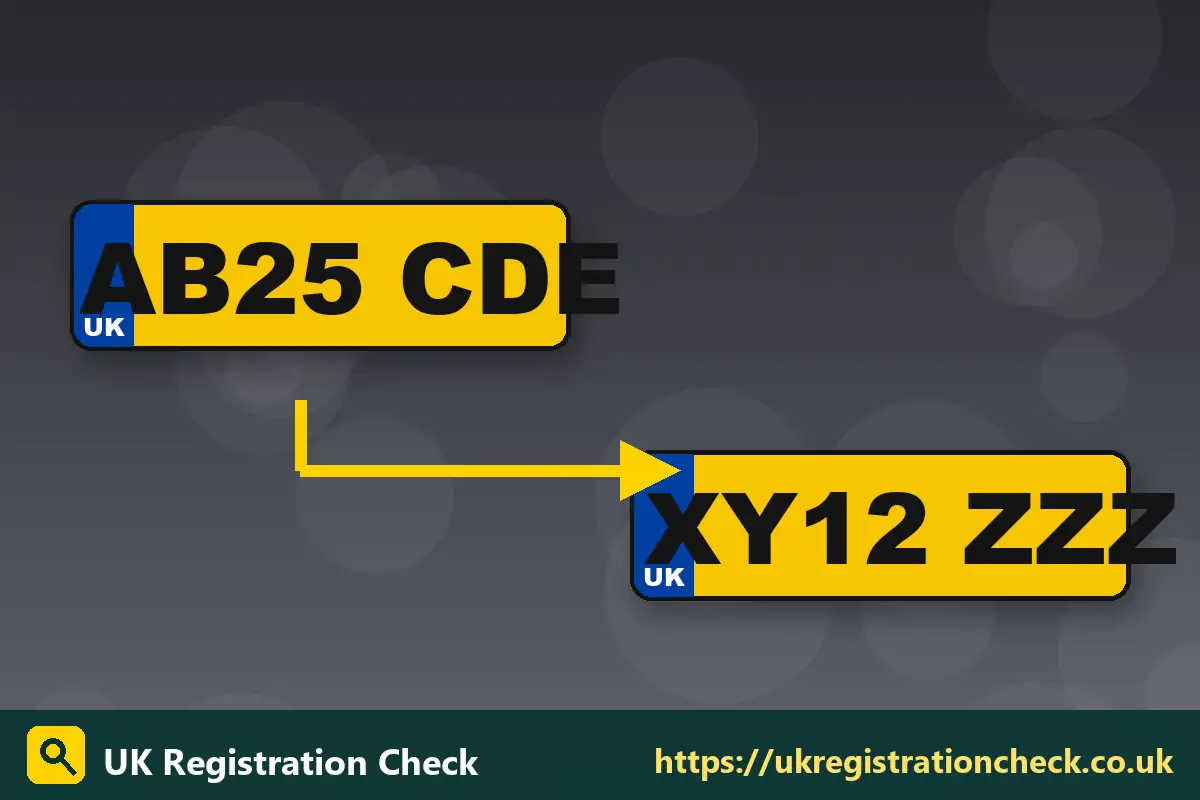
To put number plate on car legally when the number is a private registration, you first assign the number to the vehicle through the Driver and Vehicle Licensing Agency (DVLA), then fit plates made by a registered number plate supplier. Fitting plates before the DVLA has recorded the change is not allowed, even if you hold the V750 or V778 paperwork.
Part of Plate Transfer & Retention. Start with the main guide: How to Remove a Private Plate from a Car
Updated October 2026 · Independent information, not legal advice
A private number is a transferable registration: the DVLA lets it move between vehicles, provided you hold the entitlement and the vehicle meets the conditions. The steps, documents and traps below cover putting a number on a car you keep, a car you have just bought and a car that already wears another number.
How Do You Put A Private Number Plate On A Car?
You assign the registration to the car with the DVLA, wait for the new V5C, then have plates made and fitted. The DVLA record changes first and the physical plates change second.
- Check you hold entitlement: a V750 certificate of entitlement or a V778 retention document.
- Check the recipient vehicle meets the DVLA's current conditions on GOV.UK.
- Apply to assign the number online or with form V317.
- Wait for confirmation and the new V5C.
- Order plates from a registered supplier and provide the documents they ask for.
- Fit the plates and tell your insurer the registration has changed.
- Check the new number on the record.
Why not fit plates first?
A car wearing a number it is not recorded under can cause trouble with cameras, parking enforcement and the police, and may invalidate cover.
What Do You Need Before You Assign A Number?
You need proof of entitlement and proof the car is yours to change. Everything below is easier if it is gathered first.
- The V750 or V778 for the number.
- The V5C for the car receiving the number.
- Proof of identity for the supplier.
- Insurance, tax and MOT details for the car.
Who may apply
The registered keeper of the car applies, and the entitlement holder must agree if the number is held by someone else.
What Is The Licence Plate Fee?
People who search for a license plate fee usually want to know what the DVLA charges to assign a number and what a plate supplier charges for plates. The DVLA sets its fee, plates are priced by each supplier, and neither is fixed, so check the current figure on GOV.UK and get a written quote.
Costs that people forget
- The DVLA assignment fee.
- The price of the plates.
- Any broker or dealer service charge.
- Tax or MOT if they have lapsed.
How much to put private plate on car through a dealer
A dealer sets their own charge for handling the paperwork, so compare it with doing the assignment yourself.
Which Cars Can Take A Private Number?
Most registered vehicles qualify, but the DVLA sets conditions, and the main one is age: the number cannot make the car look newer than it is. Check the conditions on GOV.UK before you buy or apply.
- The car must be registered in the UK.
- It must meet current tax and MOT conditions where relevant.
- It must not be recorded as scrapped or exported.
Age-related rule
A car first registered in 2010 cannot take a plate that implies 2024, but a dateless number is usually fine on any car. See the number plate year chart and dateless number plates.
Assigning Online Or By Post
Online is the fastest route for most eligible cars. The service on GOV.UK asks for the number, the vehicle details and confirmation of entitlement. The paper route uses V317 and takes longer.
Online steps
- Open the DVLA's transfer or retain service.
- Enter the V750 or V778 details.
- Enter the vehicle's registration and V5C details.
- Confirm and pay what the service shows.
Postal steps
Complete V317, enclose the V5C and the V750 or V778, and send it by tracked post.

Putting A Number On A Car You Have Just Bought
If you have just bought the car, make sure it is registered in your name first. The DVLA will assign a number to the keeper, so wait for your V5C before applying, or apply with the new keeper details as the DVLA allows.
What about the number the car already has?
The car's current number goes back to the DVLA's records or is retained by the previous keeper. If it was a private plate, the seller should have dealt with it before the sale; see removing a private plate.
Putting A Number You Hold On Retention Onto A Car
A number on a V778 can be assigned to a car you keep. How to retain a number plate covers the earlier step. When you assign it, the DVLA gives the car the number, and the car's old number returns to the record.
What Happens To The Car's Old Number?
The car's previous number goes back to the DVLA's records, and the vehicle's original registration number stays on file. The V5C then shows the new number, and the car's history follows the car.
Does the MOT history move?
The MOT record follows the vehicle, not the number, so the history should show under the new registration. Check it with the MOT check.
Plates, Suppliers And Legal Rules
Plates must come from a registered number plate supplier, meet the British Standard, use the legal typeface and show the correct spacing. See legal number plates in the UK and the legal font.
Front and rear
Most cars need a white front plate and a yellow rear plate. Rear number plate rules cover colours and display.
What a supplier will ask
Photographic identity, proof of address and the V5C or V750/V778 showing entitlement.
Telling Your Insurer, And Updating Tax And MOT Records
Insurance is recorded by registration, so tell your insurer before the plates change. Vehicle tax and the MOT belong to the vehicle and move to the new number automatically, but check them afterwards.
- Insurance: update the policy and check the Motor Insurance Database.
- Tax: confirm on the vehicle tax status lookup.
- MOT: confirm history under the new number.
Checking insurance
Is my car insured explains how to check, since a free lookup does not show insurance.
Motorbikes, Vans, Classics And Electric Cars
Motorbikes usually need only a rear plate; vans follow car rules; classics are limited by the age rule; electric cars may carry a green flash. See motorbike number plate rules for details.
Trailers
A trailer shows the towing vehicle's number, so update it when the car's number changes.
Northern Ireland And Imports
Northern Ireland registration is still handled by the DVLA, but vehicle tests are run by the DVA. Imported vehicles must be registered in the UK before assignment.
Common Mistakes When You Put A Number On A Car
- Fitting plates before the DVLA records the number.
- Forgetting to tell the insurer.
- Using an unregistered supplier.
- Letting the V778 expire.
- Choosing a number that makes the car look newer than it is.
- Assuming tax and MOT will update themselves.
The simplest safeguard
Do the steps in order, and verify each record before moving on.
Which Assignment Route Suits You?
| Route | Speed | Paperwork | Best for |
|---|---|---|---|
| Online on GOV.UK | Usually quickest | V5C and V750/V778 details | Most keepers |
| By post with V317 | Usually slower | Form plus documents | Those who cannot use online |
| Via a dealer or broker | Depends on the firm | They handle it | Those who want it done for them |
Swapping Numbers Between Two Of Your Own Cars
To exchange numbers between two cars you keep, you use retention as a holding step. Retain number A, assign number B to the first car, then assign number A to the second. The two cars must never hold the same number at once.
Why it takes three steps
Each step is a separate DVLA record change, so the paperwork follows the order of the list above, not a single swap.
Counting the costs
Each assignment can carry its own fee, and each car needs new plates, so a swap is rarely cheaper than it looks.
A Worked Example: A New Car Arrives
You buy a used hatchback, register it in your name and want your private number on it. You hold a V778, so you apply to assign the number to the car, the DVLA confirms, and a new V5C arrives. You order plates, fit them, call your insurer and then check tax and MOT under the new number.
- The hatchback's old number goes back to the DVLA.
- The V778 is used up by the assignment.
- Your old car, if sold, keeps its own number.
What if the car already wears a private plate?
Ask the seller to retain it first, or agree in writing that the plate is included. If it is included, you do not need to assign anything.
Checking The Number Suits The Car
Before you pay, check the number is legal on the car. The DVLA will refuse a number that makes the car look newer than it is. The year chart and how to read a UK number plate show how plate ages work.
- Compare the number's age with the car's first registration year.
- Dateless numbers fit any age of car.
- Check the car's registration year with the free number plate check.
Format and readability
A number that is hard to read or spaced oddly may be refused at the supplier; see number plate spacing rules.
Buying A Number To Put On Your Car
If you buy a number from the DVLA or at auction you receive a V750. You can assign it straight away or hold it. DVLA number plate auctions explain how entitlement arises, and private number plates under 500 covers lower-priced options without quoting prices here.
Buying from a dealer
A dealer sells you the entitlement and often handles the paperwork. Ask for a written statement of what is included.
What A Plate Supplier Will And Will Not Do
A registered supplier will make legal plates for the number you are entitled to, and will refuse to make plates for a number you cannot prove. They also supply the legal font and layout.
- They check your identity.
- They check entitlement through the V5C or V750/V778.
- They add their name and postcode to the plate.
Styles you can choose
Standard, 3D or gel styles are legal only if they meet the same standard; see 3D reg plates.
Fitting The Plates Properly
Fit plates so they are secure, clean and clearly legible. Do not use stickers or paint to alter characters. A flag with identifier and a green flash are allowed within the rules; check GOV.UK.
Do-it-yourself fitting
Fitting is usually simple with the right fixings. Take care not to bend or drill through characters.
Disposing of old plates
Break up old plates so they cannot be reused.
How Long Before The Plates Go On?
The timing depends on the DVLA's processing and your supplier, so there is no fixed answer. Keep the current plates on until the DVLA confirms, and plan any MOT or sale around confirmation, not a guess.
Insurance: A Short Guide
Tell your insurer in advance, ask them to update the registration, and keep the confirmation. Vehicle insurance renewal explains how policies tie to registrations.
If the policy does not update
Do not drive until it does. Check the Motor Insurance Database.
What To Do If Something Goes Wrong
If the application is rejected, read the reason and fix it. If plates are fitted wrongly, correct them and contact the DVLA. If the car has no valid number on the road, stop driving it until it does. Contacting the DVLA explains the channels.
Keep copies
Hold on to every confirmation and receipt, because they settle most disputes quickly.
- Save the DVLA confirmation and the new V5C date.
- Keep the supplier's invoice, which shows when new plates were made.
- Note the date you told your insurer.
When the number looks wrong on a record
If the lookup still shows the old registration after the DVLA has confirmed the change, wait a short while and check again, then contact the DVLA through GOV.UK. A free MOT check is a quick way to see whether the history has followed the car.
Where To Read More
The DVLA is the official source, and the plate transfer and retention hub links the related topics, with personalised number plates for background.
Frequently Asked Questions
How to put a personalised number plate on a car?
Assign the number to the car through the DVLA first, using your V750 or V778. When the DVLA confirms the change and issues a new V5C, order plates for that number from a registered supplier, fit them and tell your insurer. Never fit plates for a number the car is not recorded under.
How to put private number plate on car without a dealer?
You can apply directly to the DVLA online on GOV.UK or by post with form V317. A dealer or broker is not required. Gather the V5C and your V750 or V778, check the DVLA's conditions and follow the service's steps.
What is a transferable registration?
It is a registration the DVLA allows to move between vehicles, usually a private number held on a V750 or V778. Moving it is a DVLA record change, not a handover of plates, and the receiving vehicle must meet the DVLA's conditions.
Do I need a new V5C after the number changes?
Yes, the DVLA issues a new V5C showing the new registration. Check every detail when it arrives and keep the old one only if the DVLA tells you to.
Can I put a private plate on any car?
Not any car. The vehicle must meet the DVLA's conditions, and the number cannot make the car look newer than it is. Check the current rules on GOV.UK before you apply.
Do I have to tell my insurer?
Yes. Insurance is recorded against the registration, so tell your insurer before the plates change. A mismatch between the plates and the Motor Insurance Database can make the car look uninsured.
Is there a license plate fee?
The DVLA charges a fee to assign a number, and plate suppliers charge for the plates themselves. Dealers and brokers add their own charges. Amounts change, so check GOV.UK and ask for written quotes.
Will my tax and MOT move to the new number?
Tax and MOT belong to the vehicle, so they should show under the new registration once the DVLA updates the record. Check them afterwards and report any problem through GOV.UK.
Can I put a number on a car on SORN?
Often yes, but the DVLA's conditions may apply, so check GOV.UK. A SORN car should stay on private land, so do not drive it to fit plates.
Who can make the plates?
Only a registered number plate supplier can make road-legal plates. They check your identity and entitlement and must supply plates that meet the British Standard.
Official Sources
Rules, fees and deadlines change. Confirm anything that affects your money or legal position with the official service.