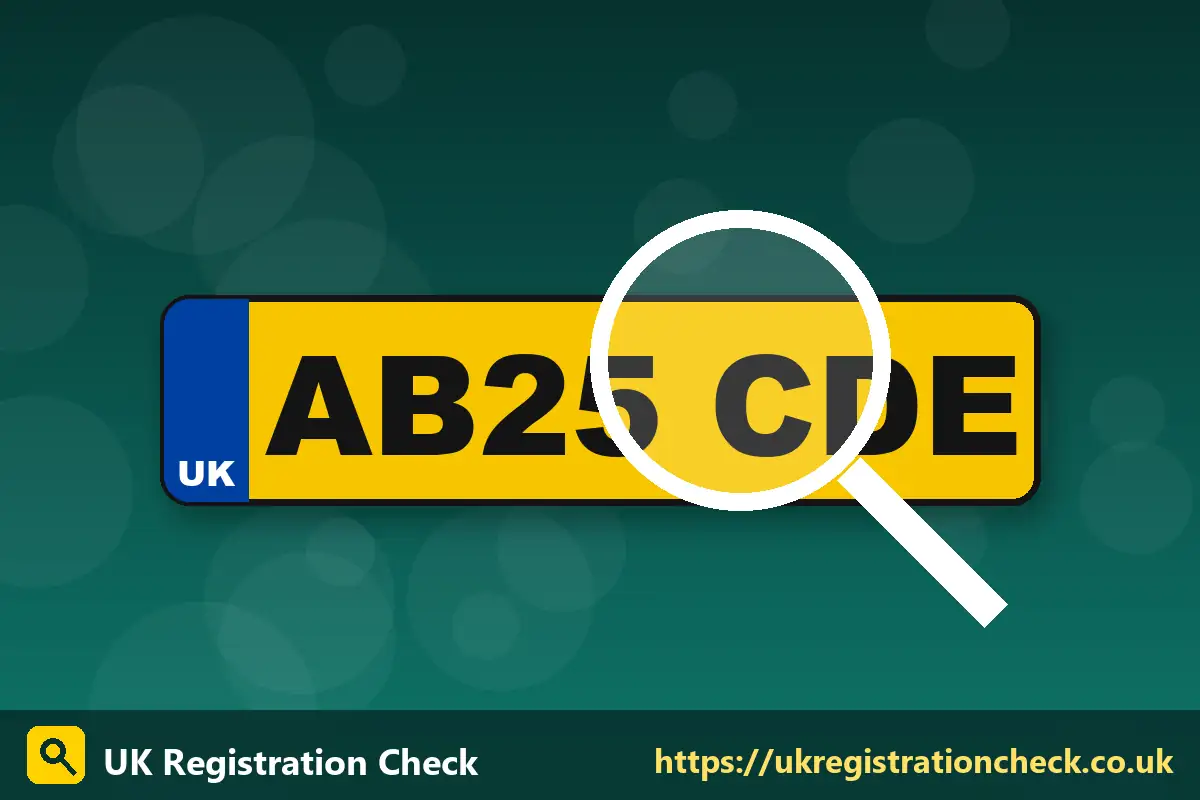
The car registration plate font in Great Britain is a version of the Charles Wright typeface, set by the rules that govern how registration marks are displayed. Every legal plate must use the prescribed characters at the prescribed size and spacing, in black on a reflective white front plate or yellow rear plate, and be made by a registered number plate supplier to the British Standard.
Part of Personalised Number Plates. Start with the main guide: Cherished Plates: What They Are and How They Work
Updated October 2026 · Independent information, not legal advice
That is why a plate that looks "almost right" can still be illegal: a fancier font, a stretched character or a changed gap breaks the standard even if every letter is readable. The sections here explain what the typeface is, how it is controlled, what it does and does not allow, and how to avoid the common font traps when ordering plates.
What Is The UK Number Plate Font?
The UK number plate font is the Charles Wright typeface in the version prescribed for vehicle registration marks. It is a plain, upright, sans-serif style designed for clarity at a distance and for reading by cameras.
Why is it called Charles Wright?
The typeface takes its name from its designer. The version used on current plates was updated for the 2001 rules, which is why the standard is often described as Charles Wright 2001.
Is it one font or a set of shapes?
It is a defined set of character shapes for letters and digits, each with set proportions. The shapes matter as much as the font name, because the standard describes how each character should look.
What Is The UK Licence Plate Font In Law?
The UK licence plate font is the typeface the regulations require on a registration plate, and the regulations also set the character height, width, stroke and spacing. The font, size and spacing together make a plate legal.
What does "prescribed" mean?
It means the font is written into the rules, not a style choice. A supplier works from the approved character shapes, not from a design library.
Does the same rule apply to every vehicle?
The font rule applies across vehicle types, though sizes differ for motorcycles and some other vehicles. See UK number plate size and dimensions.
Is The UK License Plate Font The Same As The GB Number Plate Font?
Yes. UK license plate font and GB number plate font are two ways of describing the same prescribed typeface; "license" is the US spelling, and "licence plate" is the British noun form. The standard applies in Great Britain, and Northern Ireland uses its own format with similar requirements.
What about Northern Ireland?
Northern Ireland registers vehicles through the DVLA, but the plate format differs from a GB plate. The DVA handles testing; see the Driver and Vehicle Agency.
How Does A UK Registration Plate Font Look?
A UK registration plate font uses black, upright characters with open, simple shapes and even stroke weight.
- Upright: no italics or slants.
- Sans-serif: no decorative feet or flourishes.
- Even stroke: consistent thickness throughout.
- Uppercase letters and numerals: no lowercase.
- Black: characters are black on the plate background.
Why is a plain design required?
A plain design reads quickly for people and for cameras. Fancy shapes can be misread, and a misread plate causes problems for enforcement and for the keeper.
What Does A Reg Plate Font Have To Match?
A reg plate font must match the approved shapes, sizes and gaps. The font alone is not enough, since size and spacing complete the standard.
| Element | What the rules fix | What goes wrong |
|---|---|---|
| Typeface | Charles Wright style shapes | Decorative or italic fonts |
| Character size | Height and width | Shrunk or stretched characters |
| Spacing | Gaps between characters and groups | Squeezed or widened gaps |
| Colour | Black on white or yellow | Coloured or patterned characters |
| Marking | Supplier name, postcode, standard | Missing or hidden marking |
Which element catches people most?
Spacing. A plate can use the right font and still fail because a gap was altered. See number plate spacing rules.
Which Standard Sets The Font?
The standard is BS AU 145e, and it sits alongside the display regulations. It covers materials, reflectivity, marking and the characters. A plate is legal only if it meets both the rules and the standard.
Who checks the standard?
Registered suppliers must make plates to it, and an MOT tester and the police can look at plates on the road. The DVLA keeps the register of suppliers.
Can You Use Another Font On Your Plate?
No, not on a road plate. A custom font, a styled font or a "similar" font breaks the standard, and a vehicle with such a plate can fail an MOT or attract enforcement.
What about fonts sold online?
Some fonts are described as plate fonts and are fine for posters, models and signs. Only a plate made by a registered number plate supplier counts on the road.
Can you mock up a plate with a font?
Yes, for a display. A show plate or a graphic mock-up is not a road plate. The plate viewer can help preview a registration.
How Do Raised And Gel Plates Affect The Font?
Raised plates must still use the legal characters. A 3D character that changes shape or spacing breaks the standard. See 3D reg plates for the rules.
Do gel domes change the font?
A dome does not change the font, but it can reduce clarity, so a compliant plate keeps the characters crisp.
What Does The Font Mean For Personalised Plates?
A personalised number plate, private plate or cherished number plate uses the same font as any other plate. The registration is chosen, but the typeface is not. See personalised number plates for how numbers are bought.
Does a short plate use a different font?
No. Short registrations use the same font, though spacing rules apply to them. The characters keep the standard shape.
How Are Plates Made In The Right Font?
Registered suppliers use approved characters and machines, so the output matches the standard. See how number plates are made.
- The supplier checks identity and entitlement.
- The registration is set in the approved characters.
- The characters are applied to the reflective backing.
- The finished plate is marked with the supplier details and standard.
Why not DIY?
Making your own plate for road use is not allowed. See can you make your own number plate.
How Does The Font Fit With Front And Rear Plates?
The same font applies on the white front plate and the yellow rear plate. The rear plate has its own rules on colour and display; see rear number plate rules.
What About Older Plates And Classics?
Some older vehicles can display traditional plates, such as black plates with silver or white characters, if they meet the conditions. Check GOV.UK for the current wording. See vintage vehicle number plates.
Do old styles use the same font?
Older plates may use older letter shapes. A modern plate on a classic follows the current rules, and traditional styles are allowed only where the rules permit.
What About Metal Plates?
Metal plates can be legal when they meet the standard. See metal number plates.
What Are The Rules On Stickers And Paint?
Stickers, tape or paint used to change a character are not allowed. See number plate number stickers.
- Never alter a character: a 3 changed to an 8 is a fault.
- Never join characters: a joined pair can be misread.
- Never add shading or outlines to characters: these change the shape.
How Should You Care For Plate Characters?
Cracked, faded or dirty characters defeat the purpose of the font. Wash the plate with mild soapy water, avoid harsh solvents and replace any plate whose characters peel or fade.
When does wear become a problem?
When a character is no longer clearly legible to a person or a camera. At that point the plate may fail an MOT and should be replaced.
How Do You Read A Plate In The Font?
Read left to right: two letters, two digits, a gap, three letters, on a current-style plate. The gap sits between the identifier and the final letters. See how to read a UK number plate.
Does the font show age?
The font does not, but the registration does. See the age identifier and the registration style.
How Do Other Countries Differ?
Other countries use their own fonts, colours and layouts. See number plate country codes and Irish number plates.
Why Do Cameras And People Need A Standard Font?
The font exists so a plate can be read by a person at a glance and by an automatic number plate recognition (ANPR) camera in poor light. Cameras used for parking, tolls and charging zones depend on consistent shapes.
- Contrast: black characters on a reflective background read best.
- Consistent shapes: cameras are trained on the standard characters.
- Clear gaps: touching or crowded characters merge in an image.
- Clean surface: dirt can hide characters whatever the font.
What happens when a camera misreads a plate?
A misread can send a charge or a notice to the wrong keeper, which then has to be corrected. A compliant plate reduces that risk.
Does the font matter in the rain or at night?
Yes. Reflective material and clear shapes help legibility in poor light, which is why the standard covers both.
Which Characters Are Easy To Confuse?
Some characters look alike, so the standard keeps their shapes distinct.
- 0 and O: the shapes differ in the standard font.
- 1 and I: the digit and the letter are drawn differently.
- 5 and S: the curves differ.
- 8 and B: the standard keeps the openings distinct.
- 2 and Z: the shapes differ.
Can you use a look-alike on purpose?
No. Swapping a digit for a letter, or the reverse, on the plate changes the registration. A registration that reads as a word is fine, but the characters must still be the right ones.
Why do spacing tricks cause trouble?
Moving characters so that a 1 looks like an I, or so that two groups look like one, can make a plate non-compliant and unreadable to cameras.
What About Motorbikes, Vans And Electric Vehicles?
The same font applies, with different sizes for different vehicles. A green flash is allowed on a zero-emission vehicle plate where the rules permit it.
- Motorcycles: a rear plate in the prescribed font, at motorcycle sizes; see motorbike number plates.
- Vans and lorries: the same font on larger vehicles.
- Trailers: the towing vehicle's registration, or a plate of their own; see number plates for trailers and caravans.
- Electric vehicles: the same font, with the optional green flash.
Do two-line plates use the same font?
Where two-line plates are permitted, such as on some vehicles, the same character shapes apply. Check GOV.UK for which vehicles may use them.
How Do You Check A Plate Before You Fit It?
A quick inspection catches most font problems.
- Check the supplier's name, postcode and the standard number are printed on the plate.
- Compare the characters with the registration on your V5C.
- Look for uniform shapes: no italics, flourishes or odd digits.
- Check the gaps look even.
- Confirm the colour is right for the front or rear.
What if the plate fails your inspection?
Return it to the supplier and ask for a compliant replacement. Keep your order details.
What Are The Common Font Mistakes?
- Using a stylised font for effect.
- Squeezing characters to fit a short plate.
- Choosing a supplier that does not ask for documents.
- Fitting a show plate to the road car.
- Using stickers to change the look of a character.
What Myths Surround Plate Fonts?
- "Any similar font will do": no.
- "Italic is fine if it is readable": no.
- "3D means different rules": no.
- "The font only matters at the MOT": no, it matters on the road.
What Should You Do If Your Plate Is Wrong?
Replace it with a compliant plate from a registered supplier. If an MOT fails because of the plate, fix and retest.
- Identify what is wrong: font, size, spacing or marking.
- Order a replacement.
- Keep the receipt.
- Retest if the MOT failed.
Where Is The Official Position?
GOV.UK and the DVLA publish the rules on number plates. See legal number plates in the UK, and use the free number plate check to confirm what the record shows for a registration.
Frequently Asked Questions
What is the UK number plate font?
The UK number plate font is a version of the Charles Wright typeface, prescribed by the rules on how registration marks are displayed. Characters must also meet set size and spacing requirements, and be black on a reflective white or yellow plate.
Is there a single UK licence plate font?
Yes. The UK licence plate font is the prescribed typeface for registration plates in Great Britain. The standard fixes the character shapes, size and spacing, so a supplier cannot choose a different design for a road plate.
Is the UK license plate font the same as the GB number plate font?
Yes. They describe the same prescribed typeface; license is the US spelling. The standard applies in Great Britain, and Northern Ireland uses a different format with similar principles.
Can I choose a different reg plate font?
No. A road plate must use the prescribed characters. A custom or decorative font can lead to an MOT failure or enforcement action. Fonts sold online are for display items, not road plates.
What does Charles Wright 2001 mean?
It refers to the version of the Charles Wright typeface used on plates since the 2001 rules. The name tells you the typeface and the date of the version, not a font file you can safely use on a plate yourself.
Do 3D plates use the same font?
Yes. A raised plate still has to use the legal characters, sizes and spacing. Raised styling is allowed only if the plate meets the standard, including reflectivity and marking.
Does a personalised plate use a special font?
No. A private plate uses the same font as any other plate. The registration is chosen, but the typeface is fixed by the rules.
What spacing does the font need?
The standard sets the gaps between characters and between the two groups. Changing them can make a plate illegal. See the number plate spacing rules or GOV.UK for the current measurements.
Can a classic car use an old-style plate?
Some older vehicles may display traditional plates, such as black with silver or white characters, if they meet the conditions. Check GOV.UK for the current rules for your vehicle.
Can I use a font to make a show plate?
Yes, for display. A show plate is not legal on a public road in place of the proper plates, so use a registered supplier for road plates.
Who can make a plate in the legal font?
A registered number plate supplier. It must see proof of identity and entitlement to the registration, and mark the plate with its name, postcode and the British Standard number.
Where can I check the rules?
GOV.UK and the DVLA publish the number plate rules. A registered supplier or MOT tester can also advise on whether a plate is likely to be compliant.
Is the British license plate font the same as the UK reg plate font?
Yes, in practice. The British license plate font and the UK reg plate font both mean the prescribed Charles Wright style used on road plates. It applies to the current style, prefix and suffix formats and to a dateless plate alike, so the typeface does not change with the age of the registration.
Does the font matter when I move a number between cars?
The characters stay the same, but new plates must still be made in the legal font by a registered supplier. When a private number is assigned, the DVLA records it using a V778 retention document or a V750 certificate of entitlement, or the V317 application route, and you then order plates. Check GOV.UK for the current steps.
Official Sources
Rules, fees and deadlines change. Confirm anything that affects your money or legal position with the official service.