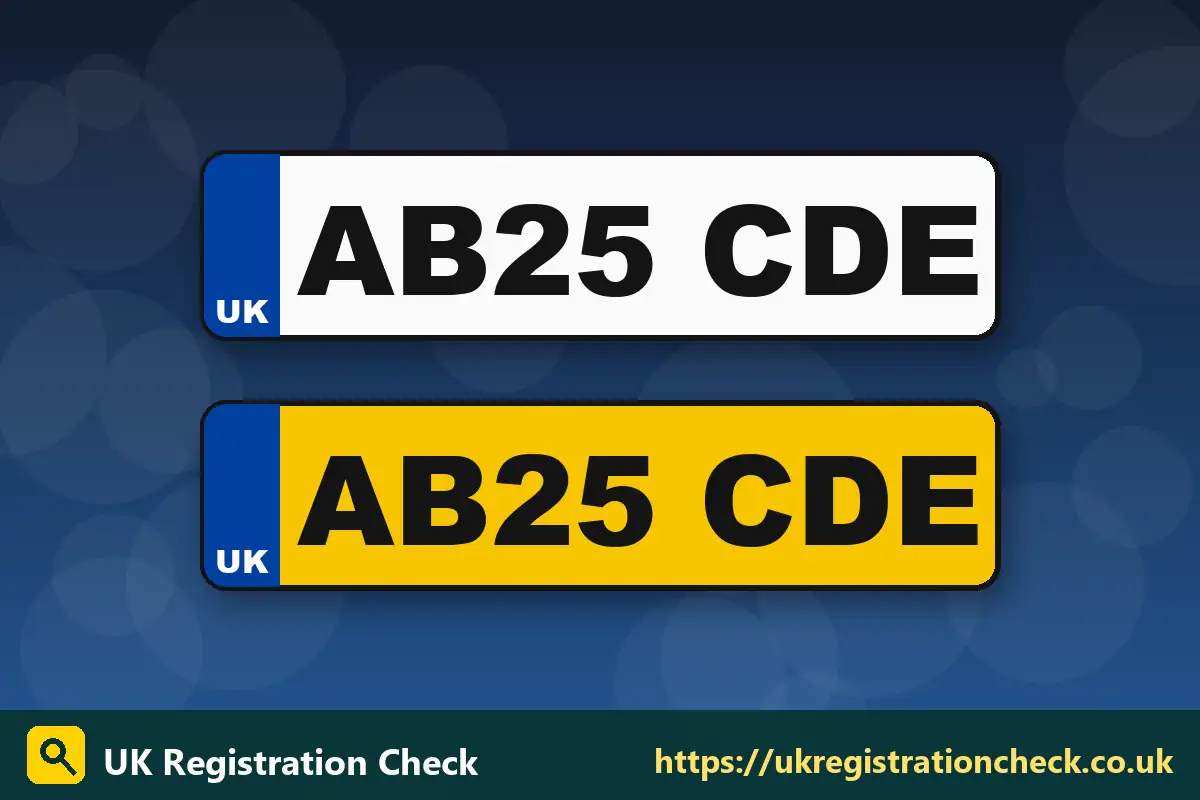
Legal number plates in the UK are plates made by a registered number plate supplier to the British Standard (currently BS AU 145e), displaying a registration that the Driver and Vehicle Licensing Agency (DVLA) has assigned to that vehicle. They are reflective, use the legal typeface, show black characters on a white front or yellow rear background, carry the supplier details and stay clean and legible.
Part of Personalised Number Plates. Start with the main guide: Cherished Plates: What They Are and How They Work
Updated October 2026 · Independent information, not legal advice
Most legal questions come down to four things: who made the plate, what it shows, how it is styled and whether the registration belongs on the vehicle. Get those right and a plate is lawful; get one wrong and you may face a fine, an MOT failure or worse. The detail below covers each rule, the common extras and the traps.
What Makes A Number Plate Legal In The UK?
In short, legal number plates UK drivers can use share one profile. A plate is legal when it meets the standard, shows the right registration and is displayed correctly. In practice that means five tests, each of which a plate must pass.
- Made by a registered supplier who checked your entitlement.
- Reflective material to the standard.
- Legal font, size and spacing.
- Correct colours: white at the front, yellow at the rear.
- Right registration for the vehicle, kept clean and visible.
Why the rules exist
Plates are read by people, cameras and enforcement systems. Strict rules keep a registration clear, identifiable and tied to one vehicle.
Who sets the rules
The standard is published by the British Standards Institution, while the DVLA and the Driver and Vehicle Standards Agency (DVSA) apply and enforce the requirements. Final wording sits on GOV.UK.
What Do UK Number Plate Regulations Cover?
UK number plate regulations govern how plates are made, what they display and how they must be fitted. They also cover who may supply plates and what proof a customer must give.
Manufacture
Only a registered number plate supplier may make plates. The supplier should see identity and proof of entitlement to the registration.
Display
Plates must be fitted so they are clearly visible, kept clean and not obscured by anything such as a bike rack or tow bar.
Marking
A legal plate shows the supplier's name and postcode and the British Standard marking.
How Do UK Registration Plate Laws Apply To The Registration Itself?
UK registration plate laws require a registration to be assigned to the vehicle through the DVLA and recorded on the V5C. A private plate cannot make a vehicle appear newer than it is, and some combinations are not issued at all.
The registration must match the record
If the DVLA record says a different registration, the plate on the vehicle is not the right one, whatever it looks like.
Age rules
Prefix, suffix and current-style registrations indicate age, so they cannot be put on a vehicle that looks younger than they suggest. A dateless plate carries no such limit.
What Are The Legal Colours And Layout?
Front plates are white and rear plates are yellow, both with black characters. Most road vehicles need both, but motorcycles usually need only a rear one. See rear number plate for rear rules in depth.
| Position | Background | Character colour | Notes |
|---|---|---|---|
| Front plate | White | Black | Required for most road vehicles |
| Rear plate | Yellow | Black | Required for all vehicles |
| Motorcycle | Yellow (rear) | Black | Usually rear only |
| Trailer | Per vehicle rules | Black | See trailer rules on GOV.UK |
What Font Must A Legal Plate Use?
The legal typeface is a version of Charles Wright 2001, and character height, width and spacing are set by the standard. Another font, even a similar one, does not meet the requirement. See car registration plate font.
What about the spacing
Characters must follow the standard's spacing. You may not move them so the registration reads differently. See number plate spacing rules.
Are Flags And Badges Allowed?
A national flag with GB, UK or a country name on the left is allowed on a compliant plate. A green flash is permitted for zero-emission vehicles. Check GOV.UK for the current layout, because only these approved additions are tolerated.
- Union flag, or England, Scotland, Wales or Northern Ireland flags.
- Identifier such as GB, UK or a country name.
- Green flash for zero-emission vehicles.
- Nothing else that changes the characters.

Are 3D And 4D Plates Legal?
Raised or gel plates are legal if they meet the same standard for font, spacing, colour and reflectivity. Novelty styling is not. See 3D reg plates and metal number plates.
Are Show Plates And Novelty Plates Legal?
A show plate is for display only at events or photos and is not a legal road plate. Novelty plates with non-standard fonts or images are the same. Both can be fun, but the proper plates must be on the vehicle when it is driven. See plate viewer.
What Makes A Plate Illegal?
A plate is illegal when it is altered, hidden, cloned or non-standard. Common examples are stickers, tape and paint used to change characters, non-reflective plates and plates with the wrong colours.
Altered characters
Changing how characters look, or spacing them to read as something else, is not allowed.
Obscured or dirty plates
A plate covered, dirty or damaged to the point that it cannot be read can attract a penalty.
Flip plates and cloned plates
Flip or flipper plates are designed to change the registration and are illegal. Cloned plates copy another vehicle's registration and are a serious offence. See number plate flipper.
What Are UK Legal Plates For Different Vehicles?
UK legal plates follow the same standard for most vehicles but differ in number and layout.
- Cars: front and rear.
- Motorbikes: rear, in a smaller layout; see motorbike number plates.
- Vans and lorries: front and rear.
- Trailers and caravans: see number plates for trailers.
- Classics: check GOV.UK for styles that suit their age.
Is There A Difference In Northern Ireland?
Northern Ireland uses a different format. Vehicle registration and tax stay with the DVLA, while testing and driver licensing are run by the Driver and Vehicle Agency (DVA). See Driver and Vehicle Agency.
What About Irish Plates And Imports?
A plate from the Republic of Ireland is not a GB plate, and Irish records are not on DVLA or DVSA systems. Imported vehicles are registered by the DVLA and receive a UK registration. See Irish number plates.
Are There Recent Changes To Plate Rules?
Rules do change. A UK number plate rule change may alter permitted fonts, standards or additions, so always check the current position on GOV.UK. Do not assume a change has taken effect because someone says so; check the date and the official wording.
How to spot a genuine change
Look for official publication from the DVLA, DVSA or GOV.UK, not summaries on social media.
What to do when rules change
Keep plates in good condition, and if a standard is updated, new plates ordered from a registered supplier will meet it.

How Do Personalised And Cherished Plates Fit In?
A personalised number plate or cherished number plate is assigned by the DVLA like any other and still needs physical plates. Paperwork includes the V750 (certificate of entitlement), V778 (retention document) and V317 application route. See personalised number plates.
What Does The DVLA Do About Illegal Plates?
The DVLA can refuse or withdraw registrations it did not intend to issue, and enforcement of plates on the road is carried out by police and local authorities. Details of powers are on GOV.UK.
What Does The MOT Check?
MOT testers check that plates are secure, legible, correctly formatted and not obscured. See what fails an MOT and MOT checklist.
How Do I Get Legal Plates Made?
- Check the registration is assigned to your vehicle.
- Choose a registered supplier.
- Show proof of identity and entitlement.
- Choose plate type, such as standard or raised.
- Fit the plates securely and keep them clean.
What a supplier will ask
Photo identity, evidence of entitlement such as the V5C, and the exact registration.
Can I make plates myself?
No. See make your own number plate for what is and is not allowed.
What If My Plate Is Damaged Or Stolen?
Replace it through a registered supplier. If it was stolen, report it to the police because a stolen plate may be used on another vehicle. Do not fix it with tape or paint.
How Should Legal Plates Be Fitted And Kept?
Fitting matters as much as manufacture. A perfect plate fitted badly can still be an offence if it is hard to read or partly hidden.
Position and visibility
Plates should be fixed squarely at the front and rear, where they can be seen clearly in daylight and in headlights. Do not cover any part with a frame, cover or accessory.
Cleaning and condition
Wash plates with the car. Faded, cracked or peeling plates should be replaced rather than patched.
Fixings
Use screws or pads that hold the plate securely. A plate that flaps or tilts may be hard to read.
- Check fixings at each service.
- Replace a cracked plate promptly.
- Never paint over a faded plate.
- Keep the reflective surface clear of film or tint.
Who Can Legally Sell Number Plates?
Only registered suppliers may make plates for the road. Many are listed with the DVLA and carry out identity checks.
Online sellers
Buying online is fine if the supplier is registered and asks for your proof of entitlement. A seller that skips checks is a warning sign.
High street and garage sellers
The same rules apply. A garage that offers plates should be able to show it is registered.
- Ask whether the supplier is registered.
- Expect an identity and entitlement check.
- Look for the supplier's name and postcode on the finished plate.
- Be wary of plates delivered with no questions asked.
What About Plates On Trailers, Towed Vehicles And Rack-Mounted Plates?
A tow bar or bike rack can hide a plate. Where that happens, rules for a second plate or trailer plate may apply; check GOV.UK. See number plates for trailers.
Cycle racks
A rear rack that hides the plate may need a legal plate fixed to the rack.
Towing a caravan
The towed vehicle shows the registration under its own rules, which are covered on GOV.UK.
- A hidden plate is not excused by the rack.
- Both plates must meet the standard.
- Check the current rules before long trips.
What Happens If I Let Someone Else Use My Registration?
Plates identify one vehicle. Lending, swapping or duplicating a registration can create offences for you and trouble for the other keeper. Keep your plates on your vehicle.
- Never lend plates to another vehicle.
- Report any theft promptly.
- Do not let anyone copy your registration.
Common Mistakes With Plate Legality
- Using a sticker to repair a character.
- Fitting plates from an unregistered seller.
- Choosing a registration that makes the car look newer.
- Letting plates get dirty or faded.
- Assuming a show plate is acceptable on the road.
- Believing a cheap plate must be legal because it is for sale.
Myths About Legal Plates
Myth: any plate sold online is legal. The seller must be registered and the plate must meet the standard.
Myth: spacing is a matter of taste. It is set by the standard.
Myth: a tinted cover is fine. Covers that make a plate harder to read are risky.
Where To Check The Official Position
GOV.UK, the DVLA and the DVSA publish the current rules. Once you have a registration, the free number plate check shows the make, MOT and tax data behind it. For older and shorter formats, see dateless number plates.
Frequently Asked Questions
What are legal number plates in the UK?
They are plates made by a registered number plate supplier to the British Standard, in the legal font, reflective and in the right colours, with the supplier details on them. The registration must also belong to the vehicle and must not make it look newer than it is.
What are UK number plate regulations?
UK number plate regulations cover how plates are made, displayed and fitted, who may supply them and what proof a buyer must give. They are set out by law and the British Standard, applied by the DVLA, the DVSA and enforcement bodies. Always check the current detail on GOV.UK.
Do UK registration plate laws let me choose any registration?
No. The DVLA decides what is available and what may be issued. A registration must not make the vehicle look newer than it is, and some combinations are not issued at all. You must also be entitled to the number before a supplier will make plates.
Are 3D plates among legal plates?
They can be, if they meet the same standard for font, spacing, colour and reflectivity. Novelty styling and non-standard characters are not legal. Ask a registered supplier whether a particular raised or gel plate meets the standard before you buy it.
Is a show plate legal on the road?
No. A show plate is for display at events and photographs, not for public roads. When you drive, the proper legal plates must be fitted, front and rear where required. Using a show plate on the road may lead to a penalty.
Can a plate with a flag be legal?
Yes, if it is a compliant plate with a national flag and identifier such as GB, UK or a country name on the left. A green flash is allowed for zero-emission vehicles. Other additions may not be allowed, so confirm the current wording on GOV.UK.
What UK number plate rule changes should I know about?
Rules and standards can be updated over time, so check GOV.UK for the current position rather than relying on summaries. If a standard changes, plates ordered from a registered supplier should meet whatever is current at the time. Treat unofficial claims about changes with caution.
What happens if my plate is illegal?
You may be fined, fail an MOT or, in serious cases such as cloning, face prosecution. Police and authorities enforce plate rules. The exact consequences depend on the offence and are set out on GOV.UK, so check the official guidance if you are unsure.
Do I need a V5C to get legal plates made?
A registered supplier will usually ask for proof of identity and entitlement to the registration, and the V5C is the common evidence. For a bought or retained registration you may also provide a V750 or V778. Suppliers set their own accepted documents.
Are UK legal plates the same in Northern Ireland?
Northern Ireland uses a different format, though the DVLA still handles registration and tax. Testing and driver licensing there are run by the DVA. The same principles apply: plates must be made to the standard and show the correct registration.
Official Sources
Rules, fees and deadlines change. Confirm anything that affects your money or legal position with the official service.