Number plate area codes are the first two letters of a current-style UK registration number, known as the memory tag. The first letter identifies a Driver and Vehicle Licensing Agency (DVLA) region and the second identifies a local office within it, so a plate beginning with L points to London and one beginning with S points to Scotland. The code shows where the vehicle was first registered, not where it is kept now.

Part of Number Plate Checks. Start with the main guide: Number Plate Check: Free UK Reg Lookup
Updated October 2026 · Independent information, not legal advice
Area codes are often misread as a map of today's owner. Below is how the system is built, a few well-known examples, how older plates handle area, what happens with personalised plates and imports, and how to confirm where a vehicle was first registered.
What Are UK Number Plate Area Codes?
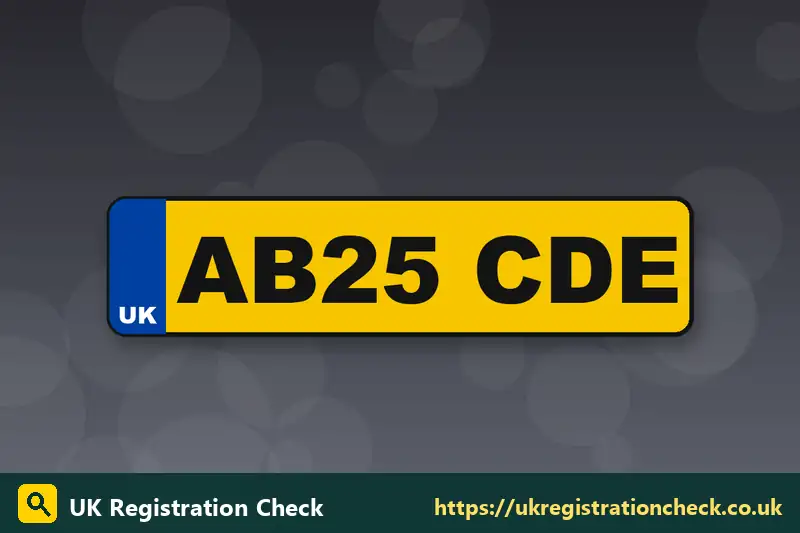
UK number plate area codes are the memory tags at the start of registration numbers issued since September 2001. They were devised so that the origin of a car could be recognised at a glance, and they sit before the two-digit age identifier and the three random letters.
How many characters make up the code?
Two. The first letter is the region and the second letter narrows it to a local office, so the pair identifies one office's allocation of registrations.
Who decides the codes?
The DVLA allocates and records registration numbers, and its full list of codes is published on GOV.UK. Treat that list as the authority, because allocations can be extended.
How Does The Memory Tag Work?
The memory tag works in two steps: region, then office. The first letter groups several local offices, and the second letter selects one of them.
The first letter: DVLA region
Each region has a first letter, and the letter is chosen to be easy to recall. Examples in common use include L for London, S for Scotland, C for Wales (Cymru), Y for Yorkshire, B for Birmingham and M for Manchester and Merseyside.
The second letter: local office
Within a region, the second letter points to a particular DVLA local office. Adjacent letters often belong to the same area, but the full mapping is a DVLA reference list.
Why old offices still appear
Many local offices closed after the DVLA centralised its work in Swansea, but the codes remain valid because registrations already issued carry them. The code reflects the original registration location.
Which Letters Are Used For Which Regions?
| First letter | Region | Notes |
|---|---|---|
| L | London | Several second letters cover different London offices |
| S | Scotland | Covers the Scottish local offices |
| C | Wales (Cymru) | Welsh offices share this first letter |
| Y | Yorkshire | Yorkshire local offices |
| M | Manchester and Merseyside | Offices in the north west |
Where is the full list?
The complete list of every two-letter pairing is published by the DVLA on GOV.UK. It is long, and the full list is not reproduced here so that nothing out of date or mistaken is repeated.
What Area Is My Number Plate From?
To answer what area is my number plate, read the first two letters and look them up in the DVLA's published list of area codes. The first letter alone often gives the region.
- Find the first two letters on the plate.
- Check the first letter for the region.
- Check the pair against the DVLA's published list.
- Remember it is the first registration location.
A worked example
Take a plate that begins LB. The L tells you it falls in the London region, and the B points to one particular local office within it. You would then confirm the office in the DVLA's list rather than assume the district, because neighbouring letters do not always mean neighbouring places.
What the rest of the plate adds
The digits that follow give the registration period, which is explained in how to read a UK number plate and the number plate year chart. The area and the age are separate pieces of information.
- The first two letters answer where.
- The two digits answer roughly when.
- The final three letters answer nothing.
Where Was My Car Registered?
If you want to know where was my car registered, the memory tag is the quickest guide on a current-style plate. For the confirmed record, the V5C logbook and DVLA records are the source, while a free lookup shows details such as make and model and MOT status.
Why the answer may not be where you live
A car can be registered in one region and driven in another. Cars bought from a dealer far away, fleet cars and cars sold across the country all carry the code of their first registration.
Does The Code Show Where The Owner Lives?
No. The area code is linked to the vehicle's first registration, not to the registered keeper. Keeper details are protected personal data and cannot be read from a plate.
- A car can change hands many times without the code changing.
- A transferred private plate may carry a code from anywhere.
- A plate cannot be used to find a person or an address.
How Do Area Codes Work On Older Plates?
Before 2001 the area was shown by a letter group, but its position depended on the format.
Prefix plates
On a prefix plate such as A123 BCD, the final letters indicated the local office, while the first letter was the year.
Suffix plates
On a suffix plate such as ABC 123A, the first letters indicated the local office, and the last letter was the year.
Dateless plates
A dateless plate has no year letter, but its letters may still come from an old local-office allocation. Read dateless number plates for how these registrations work.
DVLA Local Office Codes And What Happened To Them
DVLA local office codes came from the network of local vehicle licensing offices that existed before registration was centralised. The codes remain part of the registration system even though most local offices no longer operate.
- Codes remain valid on existing plates.
- Closed offices do not make a plate illegal or out of date.
- New allocations follow DVLA rules, so check GOV.UK for changes.
- The area meaning describes origin, not today's location.
Is There A Memory Tag List I Can Download?
The authoritative memory tag list, sometimes searched as registration area codes, is the DVLA's guidance on GOV.UK. If you rely on a third-party list, check it against the official one, as copies often contain mistakes.
Number Plate Location Versus Registration Area
The phrase number plate location can mean two things: where the plate is fixed on the vehicle, or the area code on it. The area code is about registration origin, while plate position is a legal display rule covered in rear number plate and UK number plate size.
Do Private Plates And Imports Follow Area Codes?
Private plates keep the code on the registration number, whatever vehicle displays them. Imported vehicles are registered in Great Britain and receive a registration from the DVLA, so their area code reflects the registration, not the country of manufacture.
Cherished and transferred plates
A cherished registration can be moved to a new vehicle, so its area code may be nowhere near the vehicle's actual home. See cherished plates for how transfers work.
Northern Ireland And Irish Area Codes
Northern Ireland plates use letters and numbers in a different pattern with no memory tag, while Irish plates use a county code. Read irish number plates for the Republic of Ireland system.
Motorbikes, Vans And Classics
Motorcycles, vans, lorries and classic vehicles registered in Great Britain follow the same area-code logic as cars. The code is the same wherever the plate is placed.
Motorcycles
A motorcycle plate carries the same memory tag in a smaller format, usually at the rear only.
Vans and lorries
Commercial vehicles take the code of the office where they were first registered, even when they work nationwide.
Classics and historic vehicles
A classic may carry a prefix, suffix or dateless plate, so the area logic depends on the format.
Can You Check An Area Code Without Guessing?
Yes. Enter the registration into the free number plate check to see the make, model, colour, MOT status and year of first registration from official records, a form of vehicle check that draws on the DVSA MOT history and the DVLA Vehicle Enquiry Service. It will not show an owner or address, and a plate cannot be traced to a person. The vehicle identification number (VIN), also called the chassis number, is on the V5C and the vehicle itself and is the reliable way to confirm identity.
Common Mistakes With Area Codes
- Reading the code as the current location of the car.
- Believing a code proves how old a vehicle is. It does not.
- Using an unofficial list that is out of date.
- Treating a personalised plate as evidence of origin.
- Expecting the code to reveal the registered keeper.
Quick Summary
- First letter: DVLA region.
- Second letter: local office.
- Digits: age identifier, not area.
- Last three letters: random.
- Official list: GOV.UK.
Frequently Asked Questions
What do the first two letters on a number plate mean?
On a current-style plate the first two letters are the memory tag. The first letter shows the DVLA region where the vehicle was first registered, and the second letter shows a local office within that region. For example, a first letter L points to London and S points to Scotland. The full list is on GOV.UK.
What area is my number plate from?
Look at the first two letters and compare them with the DVLA's published list of area codes. The first letter usually gives the region, such as L for London. The code shows where the vehicle was first registered, so it may not match where it is kept today.
Can I find where my car was registered from the plate?
Broadly, yes, on a current-style plate: the memory tag identifies the region and local office of first registration. For a firm answer, check the V5C logbook or DVLA guidance. A private or transferred plate may carry a code unrelated to the vehicle's own history.
Do area codes tell me who owns the car?
No. An area code relates to where a registration was originally issued, not to the registered keeper or their address. Owner details are protected personal data held by the DVLA and are only released for legitimate reasons under strict rules, so no free check will show them.
Where can I find a full list of UK number plate area codes?
The DVLA publishes the full list of memory tags on GOV.UK. Using the official list avoids the errors that creep into copied versions online. Pairs of letters are allocated to local offices, and the first letter is the region.
Are DVLA local office codes still used?
The codes still appear on existing registrations and remain valid, even though most local offices have closed since the DVLA centralised its work. A plate carrying such a code is still legal. The code describes where the registration was first issued rather than where the DVLA now processes it.
Do older plates show an area too?
Yes, but in a different position. Prefix plates carry the local-office letters at the end, and suffix plates carry them at the start. Dateless plates may use an older allocation too. The details are complicated, so use the DVLA's guidance for older formats.
Does the area code affect a car's value or tax?
Not in itself. Vehicle tax and the MOT depend on the vehicle, not on the area letters. A private plate with a desirable combination can be valued by the market, but the memory tag does not change what a standard registration costs to tax or test.
Official Sources
Rules, fees and deadlines change. Confirm anything that affects your money or legal position with the official service.