To check oil for a car, park on level ground with the engine switched off and cool enough to handle, pull out the dipstick, wipe it clean, push it fully back in, pull it out again and read where the oil film ends between the minimum and maximum marks. Do this regularly, because engine oil lubricates and cools the moving parts, and an engine running low can be damaged quickly. The registration number can help you work out the engine, which is the first step to finding the right oil.
Part of DVLA Vehicle Details. Start with the main guide: Car Spec Check by Registration
Updated October 2026 · Independent information, not legal advice
Checking the level is a two-minute job. Choosing the right oil is where people go wrong, since the grade, specification and approval depend on the exact engine. The answers below cover the dipstick method, how to read colour and consistency, how a vehicle oil checker based on the reg fits in, and what to do when a warning light appears.
How Do I Check The Oil Level In My Car?
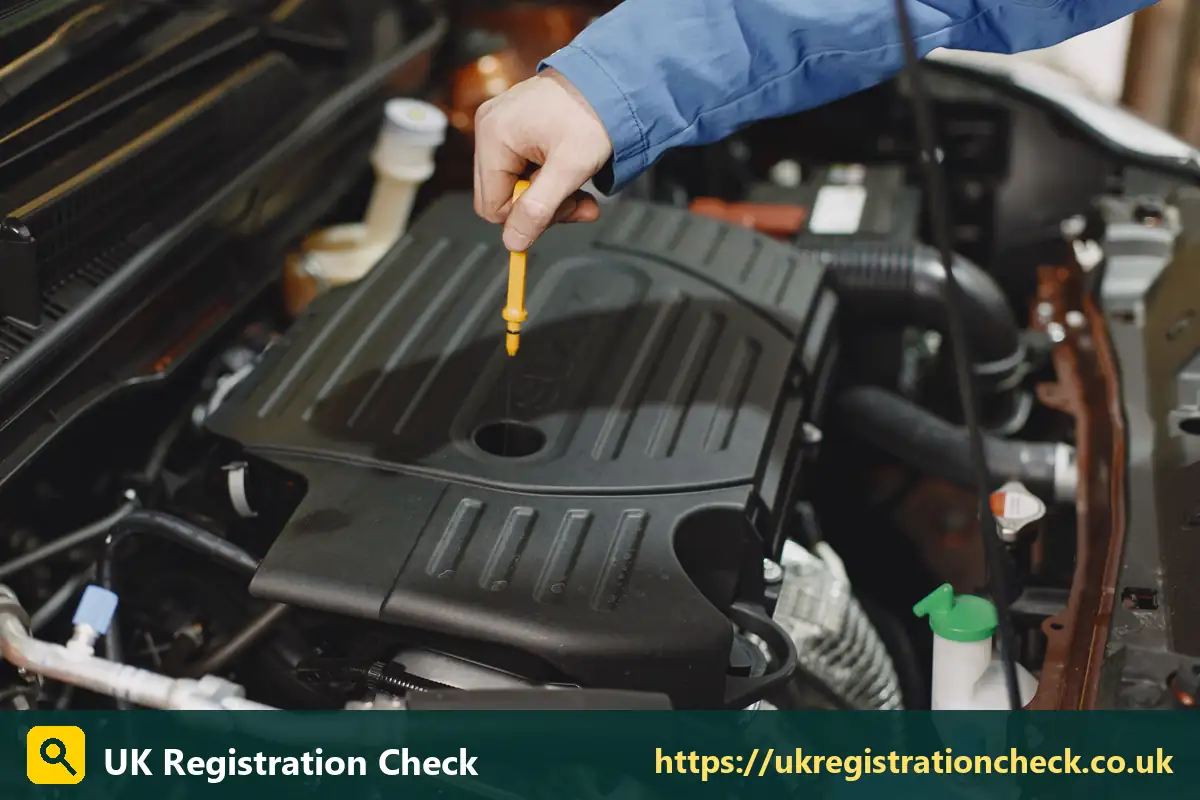
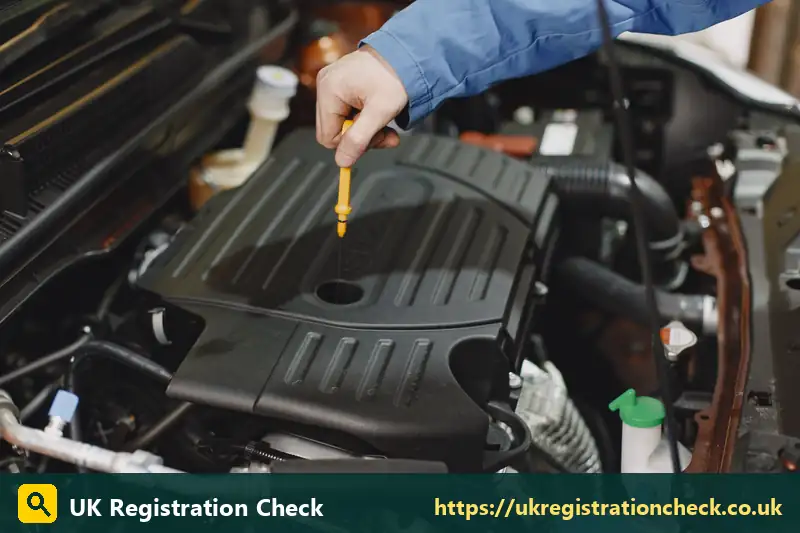
You check the oil level with the dipstick, a long thin metal or plastic rod with a coloured handle, normally marked with two points or a cross-hatched zone.
- Park on flat ground and switch the engine off.
- Wait several minutes so the oil can drain back into the sump.
- Pull the dipstick out and wipe it with a clean cloth or paper towel.
- Push it all the way back in and pull it out again.
- Read the level: it should sit between the minimum and maximum marks.
Why level ground matters
A slope shifts oil to one side of the sump and gives a false reading. A garage floor or flat drive is best.
Hot or cold engine?
Many handbooks suggest checking after the engine has been off for a short time, because oil needs to settle. Others say cold. Follow the handbook for your car, as methods differ between manufacturers.
What Does Engine Oil Actually Do?
Engine oil reduces friction, carries heat away from moving parts, helps keep the engine clean and protects against corrosion. It also forms a seal between piston rings and cylinder walls. A car with too little oil can overheat and seize.
Why old oil needs replacing
Oil gathers fuel, moisture and microscopic debris over time, and its additives wear out. That is why oil and the oil filter are changed at intervals set by the manufacturer.
How Do I Read The Dipstick Correctly?
Read the dipstick as a film of oil on the metal, not a drop.
- Between the marks: the level is acceptable.
- At or below the minimum: top up before driving far.
- Above the maximum: too much oil, which can cause foaming and damage.
Dipsticks with a crosshatch or holes
Some dipsticks have a patterned zone rather than two marks. The oil should end within that zone.
If the reading is unclear
Wipe, reinsert and read again. A smeared reading is common if the dipstick was not fully pushed in the second time.
What Colour Should Engine Oil Be?
Fresh oil is usually amber or light golden. It darkens with use, and dark oil is not necessarily bad, particularly in diesels. Thick black sludge, milky brown oil or oil with metal flecks needs attention.
Signs of trouble on the dipstick
- A milky or creamy look can point to coolant mixing with the oil.
- A gritty feel can suggest dirt or wear.
- A strong petrol or diesel smell can mean fuel dilution.
- Sludge suggests oil has not been changed for too long.
If you see any of these, get the car looked at by a garage before driving it further.
How Often Should I Check The Oil?
Many drivers check about once a month and before a long journey, though the handbook sets the actual interval. Older cars, high-mileage cars and cars that use oil need more frequent checks.
Checking before an MOT or a long trip
A quick check before a long drive or a test reduces the chance of a breakdown. See the MOT checklist for what the test covers.
How Do I Check What Oil My Car Needs?
To check what oil my car needs, the handbook is the most reliable source. It lists the viscosity grade, the oil specification or approval and the capacity.
Where else to look
- The oil filler cap sometimes shows the grade.
- A sticker under the bonnet or on the door pillar may give guidance.
- The manufacturer's dealer can confirm by VIN.
- A parts supplier's lookup, using the reg, narrows the choice.
What the numbers mean
An oil label such as 5W-30 has two parts: the number before the W describes how the oil flows when cold, and the number after it describes thickness at operating temperature. Use the grade the manufacturer specifies, not just any similar oil.
Engine Oil Checker By Reg: How It Works
An engine oil checker by reg looks up the registration to identify the make, model, engine capacity, fuel type and year, then suggests oils recommended for that engine. It saves time, but it is an aid, not a final authority.
What the registration lookup gives
The free number plate check shows make, model, fuel type, engine capacity and the year of first registration. The DVLA record does not list oil grade or specification.
Why a reg match can be wrong
Cars with the same name can have several engines. A match based only on the model might suggest an oil unsuited to your variant, so confirm against the handbook.
Vehicle Oil Checker: What To Look For In A Good One
A vehicle oil checker is only as good as its sources. A reliable tool names the manufacturer specification for the engine and does not just show brand products. Check the specification, not the brand.
- It should list the viscosity and the required approval.
- It should distinguish petrol, diesel and hybrid versions.
- It should mention particle filter requirements for diesels.
Car Engine Oil Check For Different Fuel Types
A car engine oil check is the same dipstick routine for most cars, but the oil type differs.
Petrol cars
Petrol engines often use a range of synthetic grades. Turbo petrols can be hard on oil and benefit from the exact approval.
Diesel cars
Many modern diesels with a diesel particulate filter need low-ash oil. Using the wrong oil can block the filter.
Hybrids
Hybrids still need engine oil, and the engine may run only part of the time. The oil level check is the same, but the spec can be specific.
Electric cars
A fully electric car has no engine oil to check, although other fluids and gear oils exist. Check the handbook.
What Do I Do If The Oil Is Low?
Top up with the correct oil, a little at a time, rechecking the dipstick as you go. Do not fill straight to maximum without checking, because overfilling is harmful.
- Find the oil filler cap, normally marked with an oil can symbol.
- Add a small amount of the correct oil.
- Wait a minute, then recheck the level.
- Repeat until the level is between the marks.
- Refit the cap and dipstick securely.
What if I do not know the oil grade?
Ask a garage, check the handbook or contact the dealer. Adding a wrong grade in an emergency is better than driving with almost no oil, but follow up with a proper change.
What If There Is Too Much Oil?
Too much oil can cause foaming, which reduces lubrication, and may force oil into places it should not be. A small overfill can be tolerable, but a large one needs draining. Ask a garage.
What Does The Oil Warning Light Mean?
The red oil can symbol means low oil pressure, which is serious. Stop as soon as it is safe and switch the engine off. A flashing or amber light can mean something different, such as a level warning, so read the handbook.
Do not keep driving
Driving on with a red oil warning can destroy the engine within minutes. Check the level once the engine is off, and call for assistance if the level looks right but the light stays on.
Oil level versus oil pressure
A low level can cause low pressure, but a faulty sensor or pump can too. The warning light is about pressure, the dipstick is about volume.
Which Oil Check Suits Which Situation?
If you want to check oil for car use, pick the method that fits what you are trying to find out.
| Method | Tells you | Limits |
|---|---|---|
| Dipstick | The current level and condition | Needs the car level and the engine off |
| Dashboard monitor | The level on cars without a dipstick | May need a warm engine and a set procedure |
| Handbook | The grade and approval to use | Must match your exact variant |
| Reg-based lookup | A shortlist by make, model and engine | Not a final authority |
Fitting the check into a routine
- Check at the same time as tyre pressures and screen wash.
- Check before a motorway journey.
- Check after any leak or burning smell.
- Check again after topping up.
Cars With No Dipstick
Some modern cars have no conventional dipstick and rely on an electronic oil level monitor in the dashboard. The handbook explains how to check, and often the engine must be warm and the car level.
Using the dashboard reading
The reading may need the engine off for a few minutes. Follow the exact procedure in the handbook.
Is Low Oil An MOT Failure?
An MOT does not usually check the oil level as a pass or fail item, but serious oil leaks, heavy smoke and warning lights can lead to a fail or an advisory. Read what fails an MOT and check the car's MOT history for past comments about leaks.
How Does The Engine Oil Connect To Emissions And Economy?
The right oil reduces friction and can help fuel economy. The wrong, thick oil can increase fuel use. For fuel economy by registration, see MPG for vehicles, and for emissions see the CO2 emissions figure on the vehicle record.
Buying A Used Car: What The Oil Tells You
When viewing a used car, check the oil with the owner's permission. Clean oil at the right level is a good sign, while sludge, milkiness or a very low level suggests neglect. It is not proof, but it is a prompt to ask for the service history.
- Ask for stamped service records or invoices.
- Compare the oil colour with the service dates.
- Look for leaks under the car.
- Read what to look for when buying a used car for a wider checklist.
What a registration check adds
A free check shows MOT history, mileage readings and tax status, which together hint at how the car has been used. It does not show service history, so ask the seller. See car service history.
Motorbikes, Vans And Classics
Motorbikes may share oil between engine and gearbox, use a sight glass instead of a dipstick and need motorcycle-specific oil. Vans follow the same dipstick method, but larger engines may take more oil. Classic cars often use different oil types, so ask the owners' club.
Common Mistakes When Checking Oil
- Reading the dipstick without wiping it first.
- Checking on a slope.
- Overfilling.
- Using the wrong viscosity.
- Ignoring a warning light because the level looks fine.
- Mixing oil types without checking compatibility.
Why a record helps a buyer or seller
Notes of oil changes alongside the MOT and service entries make a convincing story of care. Keep the receipts with the logbook.
Safety And Tidy-Up
Let a hot engine cool before opening the filler cap, wear gloves if you prefer, and wipe spills. Dispose of used oil at a council recycling centre, not down a drain or into the ground.
Keeping a record
A note of the date, mileage and amount added helps spot a car that is using oil unusually quickly.
What The Official Records Say About Engines
The DVLA record and the V5C registration certificate show engine capacity, fuel type and the date of manufacture or first registration. The DVLA Vehicle Enquiry Service on GOV.UK lists the engine details for free, along with the tax band and vehicle excise duty status, but it does not name the registered keeper. The DVA holds testing records in Northern Ireland, and a driving licence record is separate from any vehicle record. See DVLA vehicle details for the rest. None of them list oil requirements, so the handbook remains the authority.
Tools Worth Having In The Glovebox
- A clean lint-free cloth or paper towels for the dipstick.
- A small funnel to avoid spills.
- A bottle of the correct oil for top-ups.
- A pair of disposable gloves.
A Quick Oil Check Routine
- Park on level ground and wait.
- Pull, wipe, reinsert, pull and read.
- Check colour and consistency.
- Top up carefully with the correct oil if needed.
- Note any warning signs and act on them.
Frequently Asked Questions
How do I check the oil in my car?
Park on level ground with the engine off, wait a few minutes, pull the dipstick, wipe it, reinsert it fully, pull it out again and read the level between the minimum and maximum marks. Some cars have an electronic level monitor instead, so check the handbook for the exact method for your model.
What oil does my car need?
The handbook gives the viscosity grade and the approval or specification for your engine. A reg-based lookup can narrow the choice by make, model, fuel type and engine size, but the final answer should come from the handbook, the oil filler cap or the manufacturer's dealer.
Can I check engine oil by registration number?
A registration lookup identifies the car and its engine capacity and fuel type, and some oil tools then suggest suitable oils. The official DVLA record does not hold oil specifications. Treat a reg-based result as a starting point and confirm it against the handbook.
How often should I check my car's oil?
Many drivers check about once a month and before long journeys, but the handbook sets the interval for your car. Older, high-mileage or oil-using engines need more frequent checks. Check the level whenever a warning light, smell or leak suggests a problem.
What colour should engine oil be?
New oil is usually amber. It darkens with use, and dark oil is not always a fault, especially in diesels. Milky, gritty or sludgy oil, or oil that smells strongly of fuel, needs a garage's attention before the car is driven far.
What happens if I drive with low oil?
Low oil reduces lubrication and cooling, which can lead to overheating and serious engine damage. If the level is at or below the minimum, top up before driving. If a red oil warning light comes on, stop safely and switch off the engine.
Can I put too much oil in my car?
Yes. Overfilling can cause foaming and reduce lubrication. A small overfill may be tolerable, but a large one should be drained by a garage. Add oil gradually and recheck the dipstick as you go.
Why is there no dipstick on my car?
Some modern cars use an electronic oil level sensor and show the reading on the dashboard or infotainment screen. The handbook explains how to check, usually with the car level and the engine at a set temperature. A garage can also check it with a tool.
Does the MOT check oil?
The MOT does not normally check the oil level as a pass-or-fail item, but a serious oil leak, heavy smoke or a warning light can lead to an advisory or failure. Check the vehicle's MOT history for past notes on leaks.
Do electric cars need an oil check?
A fully electric car has no engine oil, so there is no dipstick check. It may have other fluids, such as coolant and brake fluid, and a gearbox oil in some designs. Follow the handbook and servicing schedule.
Can the wrong oil damage my engine?
It can. The wrong viscosity or specification can increase wear, block a diesel particulate filter or invalidate a warranty. Use the grade and approval the manufacturer specifies, not just a similar-looking product.
Official Sources
Rules, fees and deadlines change. Confirm anything that affects your money or legal position with the official service.